Director: Wes Anderson
Writers: Wes Anderson, Hugo Guinness, Stefan Zweig (based on works by)
Actors: Ralph Fiennes, F. Murray Abraham, Tony Revolori, Adrien Brody, Willem Dafoe, Harvey Keitel, Jude Law, Bill Murray, Edward Norton, Saoirse Ronan
Rating: 14A
Runtime: 99 min
When a director such as the legendary Wes Anderson creates a film, filmgoers know what kind of experience to expect. Over his career, Anderson has become known for his trademark quirky details and unusual techniques, and one of his films simply would not be complete without them. His new film The Grand Budapest Hotel (2014) does not disappoint, presenting a characteristically whimsical, hilarious, and often outlandish tone. This movie is an Anderson piece unlike any that has come before, as it showcases the director at his most grand and working on a scope to which few directors aspire. The result is a delightful film with a few dark shadows that will please die hard fans and may just produce a few new ones.
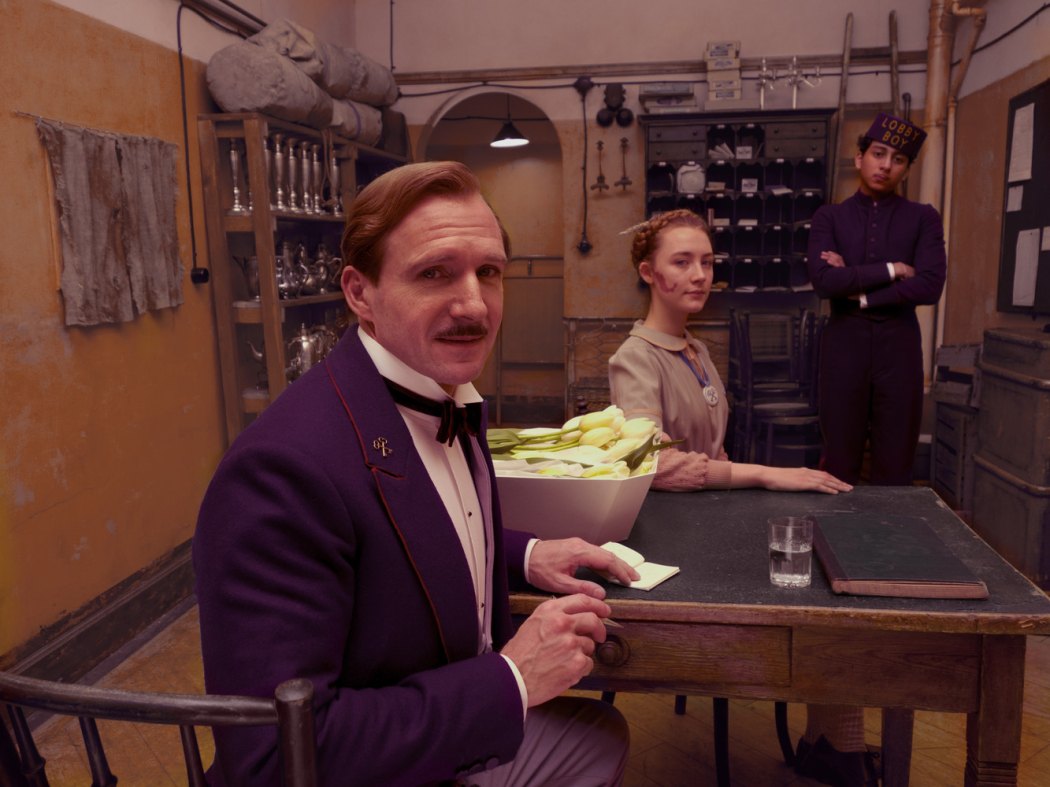
Set in a fictional European country, The Grand Budapest Hotel relates the story of the popular and personable concierge M Gustave (Ralph Fiennes) through the eyes of his young apprentice Zero (Tony Revolori). When one of Gustave’s wealthy patrons dies, the two friends become involved in the battle for an enormous inheritance which leads to priceless art thefts, great prison escapes, scheming young bakers, ruthlessly dangerous assassins, emotional love affairs, and much more. The account is narrated through a frame story by an aging author, who in turn has had the tale related to him by a key character right in the now-crumbling Grand Budapest itself.
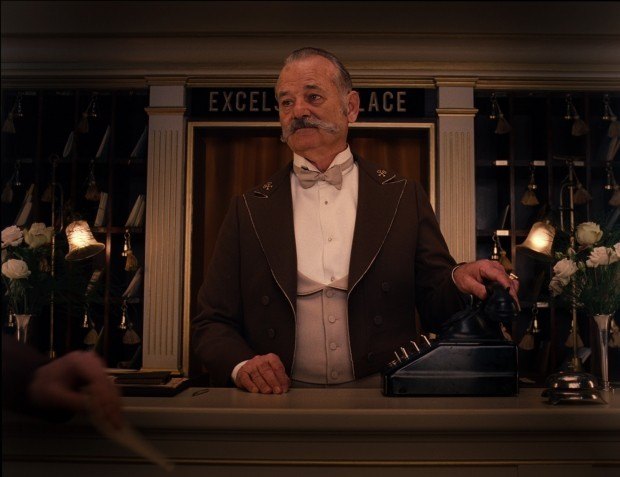
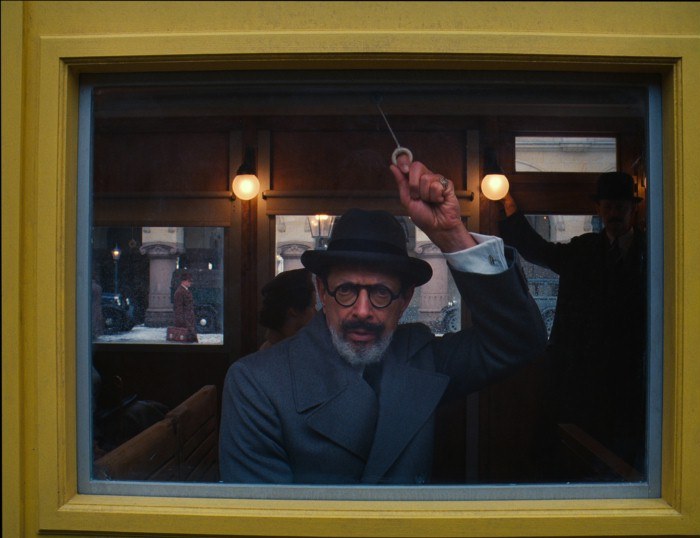
One expects a certain type of film when they watch a Wes Anderson picture, and this one satisfies on every possible level. All of the director’s characteristic elements are present: a guiding and ever present narrator, a specific colour palette, hilariously deadpan dialogue, an unusual yet memorable score, and a host of stars such as Adrien Brody, Willem Dafoe, Harvey Keitel, Jude Law, Bill Murray, and Edward Norton who make appearances that range from lengthy to fleeting but are all of the highest significance. As usual, the piece often feels like a storybook with its miniature dollhouse sets, frame stories within frame stories, and partitioned, titled chapters. The cinematography itself is also familiar, featuring overly dramatic zooms, lingering close ups, and many context shots, while the mise-en-scene is meticulously detailed; every element in every shot is present for a reason.
With a cast as impressive as the one only Anderson can draw, it goes without saying that the acting in this film is a joy to behold. The narrative rests squarely on the shoulders of Fiennes, who has never before worked with Anderson, but is sure to become a new favourite. Fiennes’ M Gustave is strict and orderly yet entirely loveable; unfailingly polite and proper until his friends are insulted. In a film full of established stars, it is refreshing to see a young actor making his big screen debut, and seventeen-year-old Tony Revolori certainly holds his own in an impressive performance. The dialogue uttered by these characters would seem unnatural in any other setting, but makes perfect sense in this world. Occasional anachronisms in its style effectively provide a good portion of the humour, as it is especially funny when elements of our world creep into this highly stylized one. It cannot be denied that this is an extremely humorous film, with jokes present in nearly every line of dialogue and quirks existent in every camera shot.
The Grand Budapest Hotel is a film as stylized as they come. However, the work offers a surprising dose of substance along with its panache, and certainly cannot be accused of froth or mindlessness. There is real emotion present here, as sincere friendly and romantic relationships often take centre stage. Anderson has crafted a film with the feel of a grand novel, building an entire world around an intriguing setting and the charming man who once ruled over it. What makes this film special is not only its massive scope, although that element certainly is impressive. The earnestness of Anderson’s filmmaking cannot be denied, and here, it appears to be matched by each and every actor present on screen. These actors believe in this world, and they emphatically believe in their director. The result is an absolutely delightful work of cinema that is sure to become an instant Wes Anderson classic.
The Breakdown
-
Direction - 10/1010/10
-
Performances - 10/1010/10
-
Screenplay - 9/109/10
-
Cinematography - 9/109/10
-
Music/Sound - 9/109/10