The short films of Jean-Luc Godard are as stylistically and thematically diverse as his feature works. Each piece is unique, presenting a different idea in a different manner. Here follows a snapshot of four Godard shorts, all playing at the TIFF Bell Lightbox’s retrospective highlighting the works of this revolutionary filmmaker. Each film is interesting on its own, but when viewed together, the compilation presents a fascinating snapshot of Godard’s work.
Charlotte et son Jules (1960)
Director: Jean-Luc Godard
Writer: Jean-Luc Godard
Actors: Jean-Paul Belmondo, Anne Collette
Runtime: 20 min
Rating: NR
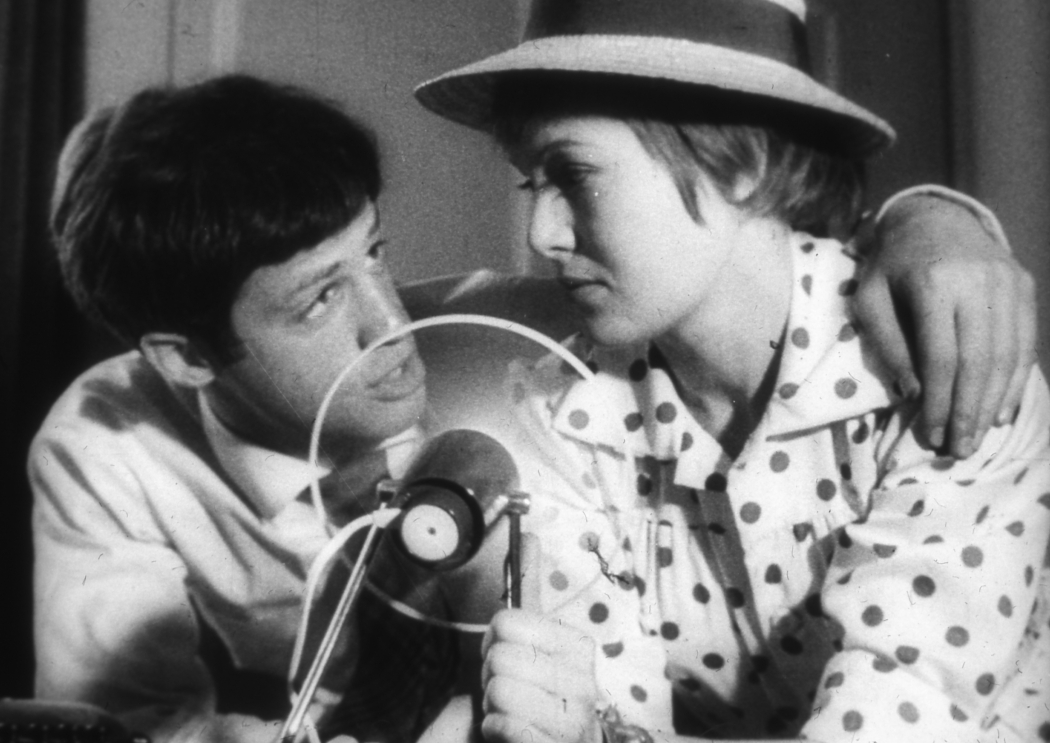
Charlotte et son Jules (Charlotte and Her Boyfriend, 1960) presents a harsh juxtaposition to its audience. A pretty woman and carefree music are paired with the brutally chauvinistic words of an angry male. As the young lady Charlotte (Anne Collette) flits around a room, she appears oblivious to the harsh abuse thrown at her from the unnamed boyfriend (Jean-Paul Belmondo) to whom she has apparently returned. The opening shots of this lady and the film’s overall style mimic that of a silent film, setting up viewer expectations for the kind of short that will be presented. The words of the man, however, defy any anticipation we have created.
Two worlds are depicted in this film: the “silent picture” world of the woman, and the “reality” of the man. Charlotte appears to literally live inside of a silent movie, not only with her aesthetic, but also with her refusal to speak. Dark humour is on display as she mimics and exaggerates the man’s actions for only the audience to see, remaining completely oblivious to his abuse. Shock is also often generated, as the man makes statements such as, “You gotta knock women around” and “deep down, you like it”; these words are so horrifying and extreme that they actually become a mockery of relationship abuse. Godard addresses the weighty topic of male and female relationships head on within this film, and a highly ironic twist at the conclusion of this short reveals his true message.
La Paresse (1962)
Director: Jean-Luc Godard
Writer: Jean-Luc Godard
Actors: Eddie Constantine, Nicole Mirel
Runtime: 15 min
Rating: NR
Like Charlotte et son Jules, the Godard short La Paresse (The Sloth, 1962) uses the filming techniques of a silent film and appealing music to create an idealistic world that lulls the viewer into comfort before utterly destroying it. An unnamed starlet (Nicole Mirel) attempts to seduce big-time actor Eddie Constantine (as himself) in order to land a part in his next movie. This man appears stoic and uninterested, however, and refuses to react to her advances. Here it is the woman who talks incessantly, while Mr. Constantine often sits in silence.
Godard uses this short to explore another male and female relationship dynamic. Although not as blatantly offensive as the words of the man in Charlotte, this man’s silence also does not show respect to his female companion, as he refuses even to acknowledge her words and address her. When he does speak, his sentences are often cryptic, and an audience is left attempting to puzzle out what he is trying to say. Another ironic joke concludes this film in a manner that may leave one laughing, as well as thinking.
Le Grand Escroc (1963)
Director: Jean-Luc Godard
Writer: Jean-Luc Godard
Actors: Jean Seberg
Runtime: 23 min
Rating: NR
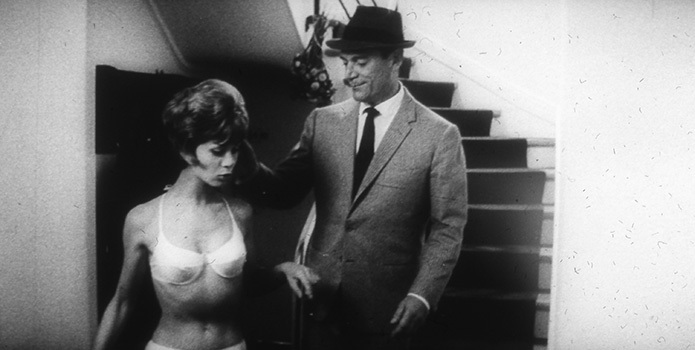
Le Grand Escroc (The Great Swindler, 1963) reveals something rare in the shorts of Godard: a woman in control. Jean Seberg plays a female filmmaker from San Francisco who hosts a television show called “The Most Extraordinary Person I have Ever Met, ” wherein she interviews people who interest her from all over the world. After interviewing a maker of counterfeit money in the desert, this strong and fearless character is forced to rethink her ethical codes, and the audience is challenged as well.
The cheeky opening of this film claims that depictions of real people or events are not coincidental, and indeed, these characters do feel like real people. Seberg is a strong actress, and she achieves the feat of bringing her young filmmaker to life in less than twenty-three minutes. Jazzy opening music sets a modern tone, and subtle gender role reversals throughout, such as the woman lighting the cigar of the man, also help to maintain this feeling. During the interview, the question of who is the real thief – the counterfeiter or the filmmaker – arises, and an audience is forced to ponder this question themselves. Concluding with Shakespeare quotations, Le Grand Escroc is an ambitious short, and my favourite within the repertoire of Godard.
Anticipation, ou: l’amour en l’an 2000 (1967)
Director: Jean-Luc Godard
Writer: Jean-Luc Godard
Actors: Jacques Charrier, Anna Karina, Marilù Tolo, Daniel Bart
Runtime: 20 min
Rating: NR
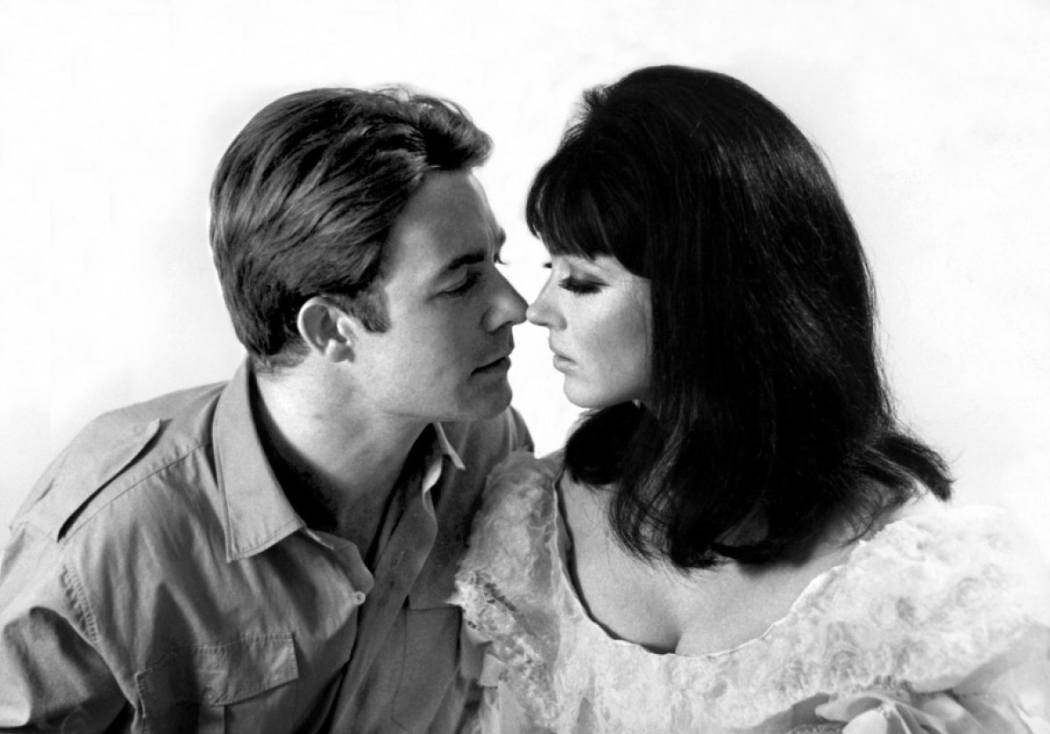
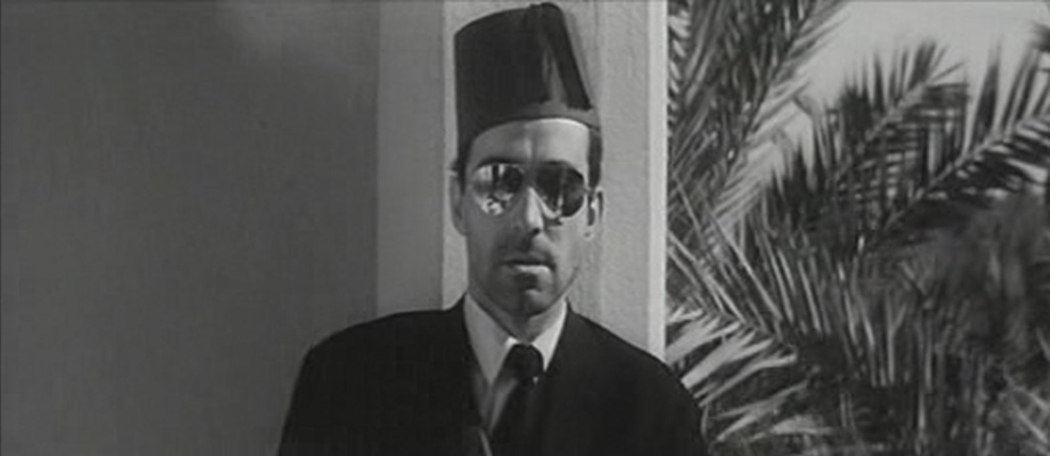
While some of Godard’s short films follow a traditional narrative, his work Anticipation, ou: l’amour en l’an 2000 (Anticipation, or: love in the year 2000, 1967) certainly does not. This final short presents predominantly images as opposed to a storyline, and said pictures are often terribly off-putting and unsettling. Uneasy music and sound sets this tone immediately, placing the viewer on edge and preparing them for that which is to come.
Anticipation details the workings of prostitution in the then-futuristic year of 2000, and is full of harsh erotic imagery. The humanoid alien Demetrius (Jacques Charrier) arrives on Earth from a distant planet, and quickly selects a human to bed. An emotionless and surprisingly female voice describes all that is depicted on screen, but in a confusing and cryptic manner. Like many Godard works, the film also offers a commentary on both gender and race relations. This work may not be enjoyable to watch, but it certainly has a lot to say, and would have been considered especially forward thinking at the time of its creation, as it addresses the topic of prostitution in a straightforward and unblinking manner.