Director: Daniel Barber
Actors: Brit Marling, Hailee Steinfeld, Sam Worthington, Muna Otaru, Kyle Soller
Writer: Julia Hart
Country: USA
Runtime: 95 min
Rating: 18A
Stories of war fill our cinemas, and seldom fail to incite audience interest. However, many war movies remain content to tell the same tales in predominantly the same manner. Director Daniel Barber’s Civil War drama The Keeping Room (2013) uses the perspective of three women and reveals a side of this war that few consider. The result is a beautiful yet undeniably violent film that juxtaposes lovely and horrifying imagery and causes a viewer to consider an oft-represented event in a whole new manner.
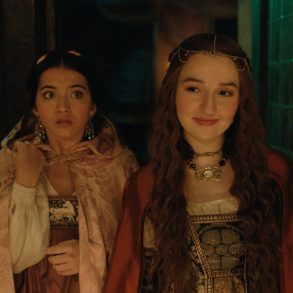
After all of the men have been sent into battle, Augusta (Brit Marling), her young sister Louise (Hailee Steinfeld), and their slave Mad (Muna Otaru) are left to run their family’s South Carolina farm during the final days of the Civil War. When two drunken Yankees with sinister intent (Sam Worthington and Kyle Soller) discover the isolated women, the three are forced into a struggle to fend off the marauders and to protect their home and each other. As the film progresses, barriers of gender and race begin to disappear as the women find themselves working together and assuming traditionally masculine roles. The elements of acting, score, cinematography, and narrative all combine in this film to create an oddly poetic tale of bravery and brutality.
One of the strongest aspects of this film is undoubtedly its powerful lead performances. At the helm of the work is Marling as Augusta, a courageous young woman who finds herself willing to do whatever it takes to protect her younger companions. As usual, Steinfeld delivers a strong performance as Louise, but it is Otaru who truly stuns, and she presents a monologue so heartrending and well delivered that it brings to mind Viola Davis’ similarly brief yet affecting Academy Award nominated turn in Doubt in 2008. These young women are the heart of the film, and it is fortunate that the three actresses were able to bring them to life in such a believable manner.
The score of the film is also quite exceptional, as director Barber is able to create and dissipate tension wholly through the use of sound. The cinematography is often beautiful, which becomes unsettling when set beside the brutal violence that punctuates the film, and unusual camera angles are often selected over mundane ones in order to create intrigue. These lingering shots also result in a film that takes its time setting up its action, and a few scenes seemed unnecessary and almost out of place. The film could be considered a bit too slow for these reasons; however, audience patience is rewarded, for once the action does begin it does not let up for a moment.
At the world premier of The Keeping Room, screenwriter Julia Hart explained the inspiration for her work. After visiting a farmstead and hearing that there were Yankee soldiers buried in the backyard, Hart wondered what kind of women would be able to achieve such a feat, and this film is her speculative answer. An audience watches not only as women stand up to men, but also as black characters stand up to white, and the film presents a world that is changing on many different levels. Here is a unique and intense war movie that reveals an unseen and often unconsidered point of view, and that certainly deserves our attention.