Director: Jean-Marc Vallée
Actors: Reese Witherspoon, Laura Dern, Thomas Sadoski, Michiel Huisman
Writer: Nick Hornby (screenplay), Cheryl Strayed (source)
Country: USA
Runtime: 120 min
Rating: 14A
Films with similar themes will inevitably draw comparisons. When I first heard about director Jean-Marc Vallée’s film Wild (2014), I immediately thought of last year’s Festival and personal favourite Tracks (2013), and wrote the former off as an imitation. Fortunately, however, these works are in actuality two very different films, and could even be said to belong to different genres. Wild is not so much a film about a physical journey as it is about a psychological one, and ends up revealing an exceptionally powerful relationship drama that is as moving as it is inspirational.
Vallée’s film is an adaptation of protagonist Cheryl Strayed’s memoir of the same name, and tells the true story of a young woman (Reese Witherspoon) who embarks on a one thousand mile hike along the Pacific Crest Trail in an attempt to leave her dark past behind her. After the death of her beloved mother, Cheryl spirals into an abusive pattern of reckless sex and drug abuse. After hitting rock bottom, she decides to embark on her cathartic journey of self-discovery. Along the way, Cheryl forms relationships and meets incredible people, and is able to reflect on all that has occurred in her life – and, just maybe, to make peace with it.
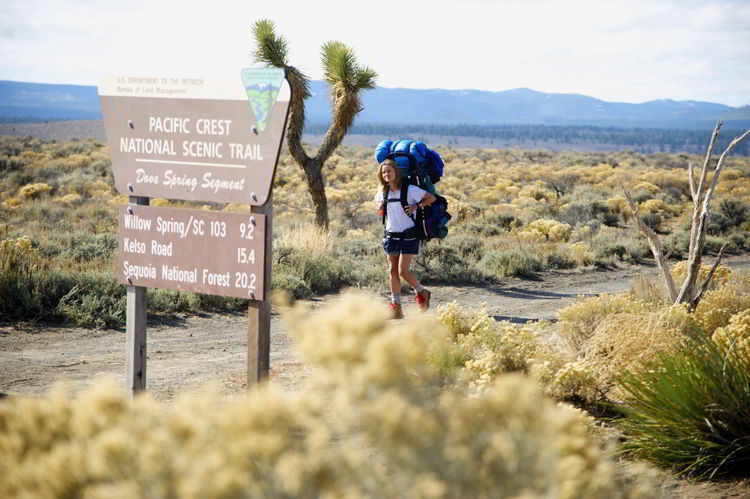
After admiring Mia Wasikowska’s raw performance in the aforementioned Tracks, I was concerned that Witherspoon’s turn may seem glamorous in comparison. I could not have been more wrong, however, as Witherspoon presents an individual who is dark and emotional while remaining feisty and believable – exactly the type of character than an audience can easily get behind. Cheryl’s struggles range from difficulty setting up her tent and cooking food to the threat of assault from backwoods hillbillies, and an audience feels as though they are with her all the way. This film is not really focused on hiking, though, and Cheryl’s true battles occur as she wrestles with her memories and past actions.The frequent use of interior monologue, wherein Cheryl speaks to herself inside of her own head, allows an audience to know exactly what she is thinking and to effortlessly relate.
This film feels like a work by director Vallée, managing to be simultaneously grand and intimate in a way that is seldom achieved on the screen. The scenery and cinematography that shows Cheryl’s hike is appropriately stunning, but the focus of the film is never on this physical journey. Frequent flashbacks reveal Cheryl’s dark backstory, sometimes in momentary snippets and other times through entire or repeated scenes. There is so much going on in Cheryl’s mind that Vallée uses several techniques to exemplify it. The snatches of music, memories, and monologues combine to create a mosaic that is one of the closest representations of the human mind that I have seen on film. An audience is able to understand this protagonist intimately, while they are at the same time attempting to puzzle out her story with the pieces of information that they are allotted.
Wild is a film is about an incredibly powerful relationship, and the reaction one individual has to its loss. Here is where the true drama lies, creating the heart of the film and preventing it from becoming just another journey flick. Watching the relationship between Cheryl and her angelic mother is at once heartrending and inspirational, and this description may be the best one possible for this work overall. Wild is a film that may generate surprise with its dark tone, but ultimately results in an uplifting and deeply affecting filmgoing experience.